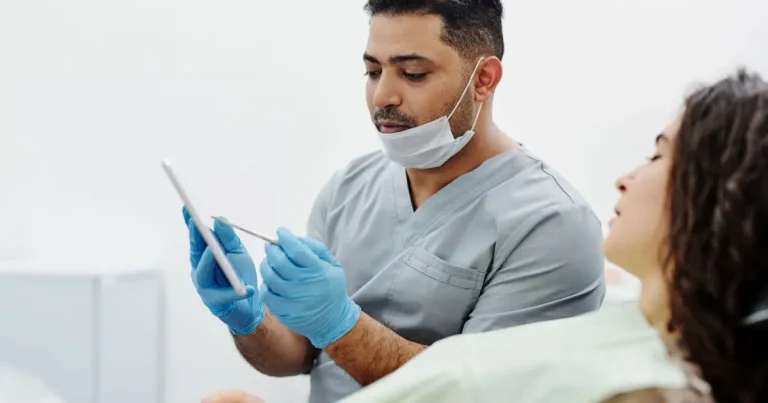

Take two hypothetical career starters. Dana lives in Ohio, finishes a short phlebotomy course at a community college, passes a national exam and starts applying within weeks. Marco lives in California, takes a course of similar length, passes the same kind of exam, and then waits while the state reviews his application for a certificate he legally needs before drawing blood for pay. Same skill, same exam, very different timelines. The difference is the state.
That contrast is the whole subject of phlebotomy certification in one picture: in most states the credential is a hiring preference set by employers, and in a few it is a legal requirement set by the government.
Key takeaways
- Most states do not license phlebotomists, but most employers still prefer or require a national certification such as NHA CPT or ASCP PBT.
- California, Nevada, Washington and Louisiana have their own phlebotomy credentials; check the state agency before choosing a program.
- The documented number of live draws you complete in training often decides which exams you can sit for.
How long a phlebotomy program takes
Phlebotomy is one of the shortest routes into patient-facing healthcare work. Programs at community colleges, adult education centers and vocational schools commonly run from several weeks to a single semester, combining classroom hours (anatomy, order of draw, infection control, specimen handling, patient identification) with supervised practice on real people. Some programs include an externship at a hospital or lab.
The clinical part matters more than the total length. When you compare programs, ask how many supervised venipunctures and capillary sticks each student completes, where they happen and whether the school documents them in a form the exam bodies accept. A program that sends you out with practice on a training arm and few live draws can leave you ineligible for the exam you wanted.
The national exams side by side
NHA Certified Phlebotomy Technician (CPT)
The National Healthcareer Association’s CPT exam is widely used by schools and employers. NHA asks candidates to document at least 30 successful venipunctures and 10 capillary sticks on live individuals, and it offers both a training-program route and a work-experience route. The exam is taken at a testing center or with remote proctoring, depending on the option you choose.
ASCP Phlebotomy Technician (PBT)
The American Society for Clinical Pathology’s Board of Certification offers the PBT credential. ASCP lists several eligibility routes, ranging from completion of an accredited phlebotomy program to combinations of training and documented work experience, and its route documentation tends to be more detailed. ASCP’s credential is common in hospital laboratory settings. Check the exact route forms on the ASCP site before you apply, because each route carries its own paperwork.
Other recognized bodies
American Medical Technologists (AMT) and the National Center for Competency Testing (NCCT) also certify phlebotomists. Which one you choose usually comes down to what your program prepares you for and what the employers near you mention in postings.
The four states with their own rules
California has the most structured system. The Department of Public Health’s Laboratory Field Services issues several phlebotomy certificates, and the main entry credential is the Certified Phlebotomy Technician I. Training must come from a state-approved program, the state sets different pathways depending on how much prior experience you have, and you also pass a national exam from an approved certifying organization. Approval takes time, so build that into your plans.
Washington uses a medical assistant-phlebotomist credential issued by the Department of Health. Under the state’s rules (WAC 246-827-0400), you qualify through a listed national phlebotomy certification or by completing a phlebotomy training program, and the credential renews every two years on your birthday.
Nevada regulates phlebotomy through its laboratory personnel rules, and Louisiana certifies phlebotomists through the Louisiana State Board of Medical Examiners, with a background check and a national exam as part of the application. In both states, contact the agency directly for current forms and fees, because these requirements are updated without much notice.
If you plan to move, keep in mind that a state credential from one of these states does not transfer automatically to another.
What the work pays and where it happens
The U.S. Bureau of Labor Statistics reported a median wage of $45,230 a year for phlebotomists in May 2025 in its Occupational Outlook Handbook. Phlebotomists work in hospitals, diagnostic laboratories, blood donation centers, physician offices and mobile collection services. National lab companies are a common first employer; our article on Labcorp phlebotomist jobs shows how one of them writes its requirements.
Common questions
Can I get hired without any certification?
In states without a phlebotomy license, some employers hire people with prior experience or will train them, and some lab companies run trainee programs. Certification still widens the number of postings you qualify for, and in California, Washington, Nevada and Louisiana a state credential is required regardless.
Is an online-only phlebotomy course worth it?
Theory can be learned online, but the exams require documented live draws. A course with no supervised clinical component usually leaves you unable to sit for a recognized exam. See our comparison of online and in-person training.
Do I have to renew my certification?
Yes. National certifying bodies require periodic renewal, typically with continuing education credits and a fee. State credentials have their own renewal cycles. Put the dates on your calendar the day you pass.
Which exam do employers prefer?
There is no single answer. Hospital labs often mention ASCP, while clinics and lab chains frequently accept several bodies. Search ten postings in your area and count which names appear.
Where this leaves you
Start with your state, not with a school’s brochure. If you are in one of the four licensing states, the state agency’s requirements decide which programs are worth your money. Everywhere else, pick a program that documents enough live draws for the national exam that local employers mention most. A certificate improves your odds; it does not guarantee a job, and any school that promises one is telling you something it cannot know.