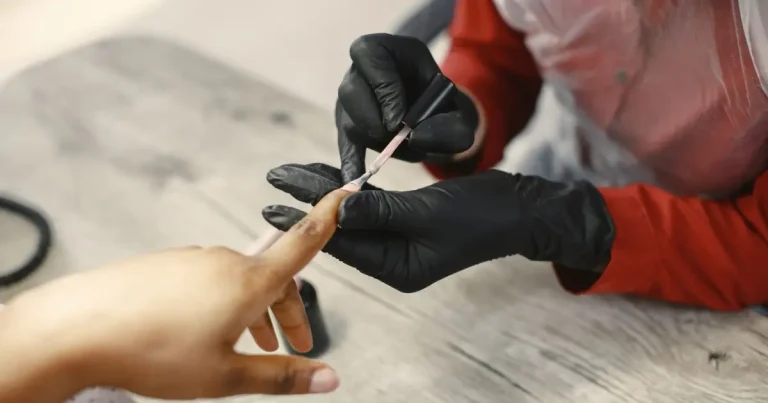

You are standing behind a pharmacy counter on your third week. A customer wants to know why their prescription is not ready, the phone has rung four times, the pharmacist needs a count of 90 tablets verified, and an insurance claim just came back rejected. Nobody expects you to solve the clinical questions; that is the pharmacist’s job. They do expect you to stay accurate while all of it happens at once. That is pharmacy technician work, and the path into it is shorter than most healthcare careers, but it runs through your state board first.
The order of operations, as a checklist
- Look up your state board of pharmacy’s technician rules (registration, licensing or certification).
- Decide between an employer training program and a school program.
- Register as a trainee if your state requires it before you start working.
- Meet the eligibility rules for PTCB’s CPhT or NHA’s ExCPT exam.
- Pass the exam and upgrade your state registration if required.
- Track renewal dates and continuing education from day one.
Step one: your state board
Pharmacy technicians are regulated state by state, and the rules vary more than in most fields. Some states require registration only, some require national certification, some require completion of an approved training program, and some combine all three.
Texas is a good example of a structured system. The Texas State Board of Pharmacy requires anyone working as a pharmacy technician or technician trainee to register with the board before starting work. Trainee registration requires a high school diploma or equivalent. To register as a full pharmacy technician, you must first become nationally certified through PTCB or the ExCPT exam. All applicants submit fingerprints for a criminal history check, and a technician license from another state does not transfer to Texas.
California, by contrast, licenses technicians through its Board of Pharmacy with its own list of qualifying routes. Other states are lighter. Check your own board’s page rather than relying on what a friend did in another state.
Step two: how you get trained
There are two common routes.
Employer training. Large retail pharmacy chains and some grocery pharmacies hire trainees and train them on the job, often with support toward the national exam. This route lets you earn while you learn, and it is usually the cheapest. The tradeoff is that training focuses on that employer’s retail workflow.
School programs. Community colleges, vocational schools and some hospital systems run pharmacy technician programs, often several months long, sometimes including an externship. PTCB recognizes certain education programs, and some programs carry accreditation through the American Society of Health-System Pharmacists and the Accreditation Council for Pharmacy Education. Hospital employers often prefer graduates of these programs. Before enrolling, confirm the program qualifies you for the exam you want and meets your state board’s rules.
PTCB or ExCPT
Both lead to a nationally recognized certification, and many state boards accept either.
| PTCB CPhT | NHA ExCPT | |
|---|---|---|
| Who offers it | Pharmacy Technician Certification Board | National Healthcareer Association |
| Eligibility | PTCB-recognized education or training program, or equivalent work experience (500 hours) | Training program or qualifying work experience |
| Where it shows up | Common in hospital and health-system postings | Common in retail settings |
| Fee as of 2026 | $129 per PTCB’s site | Check NHA’s current fee |
The PTCB CPhT page lists the current requirements and fee. Whichever you choose, check that your state board accepts it and look at which name appears in local job postings. PTCB also offers advanced credentials, such as its compounded sterile preparation certification, that matter for hospital careers later.
Retail and hospital work are different jobs
Retail technicians handle a high volume of prescriptions, insurance problems, customer questions and inventory. Hours follow store hours, including evenings and weekends. The pace is fast and the customer contact is constant.
Hospital technicians rarely face customers. They fill medication carts and automated dispensing cabinets, prepare doses, may compound sterile IV medications under strict procedures, and deliver medications to units. Shifts can include nights. Hospitals more often require certification at hire, and sterile compounding work usually requires additional training.
Neither is a step down from the other. Many technicians start in retail, get certified and later move into hospital roles. The Bureau of Labor Statistics reported a median wage of $45,750 a year for pharmacy technicians in May 2025 and projects 6 percent employment growth from 2025 to 2035, faster than average, according to its Occupational Outlook Handbook.
Common questions
Can I work while I am still training?
In many states, yes, as a registered trainee working under a pharmacist’s supervision. Texas, for example, has a specific trainee registration. Some states set a time limit on trainee status, so check yours.
Does a criminal record disqualify me?
Not automatically. Boards review criminal history case by case, and drug-related convictions get closer scrutiny because of access to controlled substances. Many boards let you ask for a review before you invest in training.
Is there continuing education?
Yes. National certifications require continuing education to renew, and many states have their own CE requirements. In Texas, the board notes that national certification no longer exempts technicians from state CE or audits.
Is the work mostly counting pills?
Less than people think. Data entry, insurance processing, inventory, customer service and, in hospitals, medication preparation take up much of the day. Accuracy is the skill employers value most.
If you are still weighing courses, our guide on choosing a certificate program lists what to verify before paying.
If you only remember one thing
Start with your state board of pharmacy, not with a school or an exam. The board’s rules decide whether you need to register before working, which certifications count and whether a program qualifies. Once that is clear, an employer-paid training route can get you working and certified for a fraction of the cost of a private program, though no program or employer can guarantee you a job at the end.